Structural Drying in Monroe, NC
Surface dry is not dry. Framing, subfloor and the inside of walls hold water long after the floor feels fine, and in a humid Piedmont summer that hidden water grows mold. The drying team dries the structure itself, and proves it with readings.
(888) 578-4720Get structural drying help in Monroe now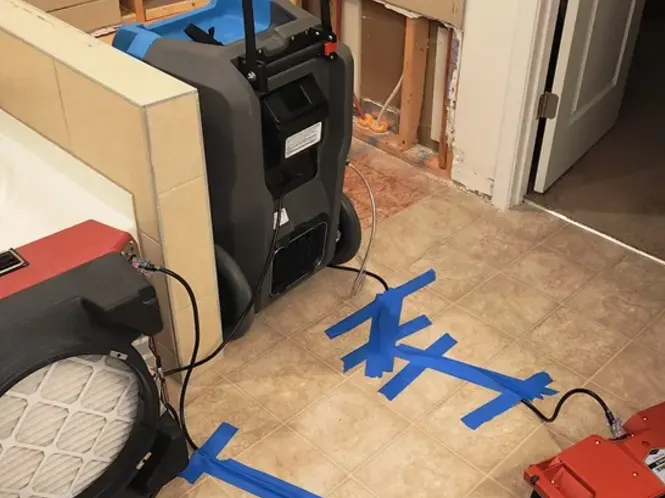
What to do right now about structural drying
- No. 1Stop the source. No drying plan works while water is still coming in.
- No. 2Remove standing water. Extraction first, drying second.
- No. 3Open up the house. Open interior doors between wet rooms, keep exterior doors shut on humid days.
- No. 4Lift contents off wet floors. Furniture on blocks, rugs and boxes out of the room.
- No. 5Call for a drying plan. Readings, not appearance, decide when it is dry.
How structural drying is handled in Monroe, NC
- 1
Map moisture
The tech who does the walkthrough maps wet materials and records the dry reference.
- 2
Class the loss
The drying team sets the class and sizes air movers and dehumidifiers.
- 3
Dry and adjust
Equipment runs continuously and is moved as areas dry.
- 4
Verify the goal
Readings are logged daily until the S500 goal is met.
What does structural drying cost in Monroe, NC?
In Monroe, NC, structural drying typically runs $1,200 to $6,500, depending on the class of the loss, the number of rooms and the square footage, how many days the equipment runs and whether specialty drying for hardwood, plaster or crawl spaces is needed.
Class 1 or 2, one area
- Moisture mapping
- Air movers and LGR
- Three to five days
Class 3, several rooms
- Ceiling and wall drying
- Cavity drying systems
- Daily logs
Class 4 or whole level
- Desiccant drying
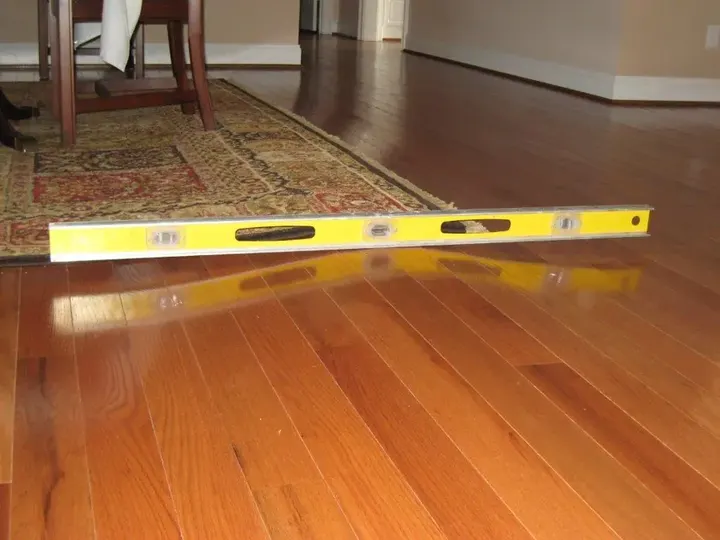
- Hardwood or plaster
- Extended monitoring
For a closer planning number, run the water damage cost calculator. Cost depends on the water category, the square footage, the material class and how fast drying started.
Structural drying is the part of a water loss that decides whether the damage stays fixed. It is also the part most often cut short, when fans are pulled because the carpet feels dry while the bottom plates and subfloor are still wet.
How the drying plan is built
The tech who does the walkthrough starts with moisture mapping: pinless meters and a thermal camera find wet materials, pin meters confirm them, and readings are taken on the same materials in an unaffected part of the house as the dry reference. The loss is then classed. Class 1 is a small area with little absorbed water; Class 2 is a whole room with wet carpet and walls wicked up to about two feet; Class 3 involves ceilings and walls saturated from above; Class 4 means dense materials like hardwood, plaster and concrete that need specialty drying.
The equipment and why it is sized
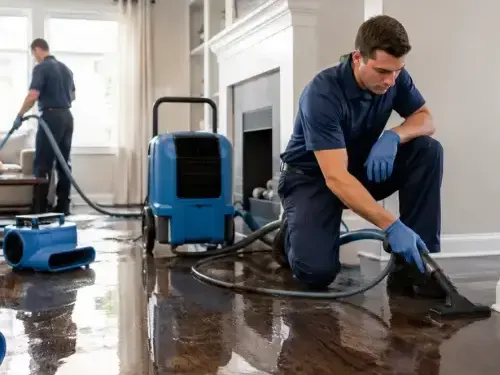
- Air movers set along wet walls to keep evaporation going at the surface
- LGR (low grain refrigerant) dehumidifiers that pull water from the air even as it gets drier
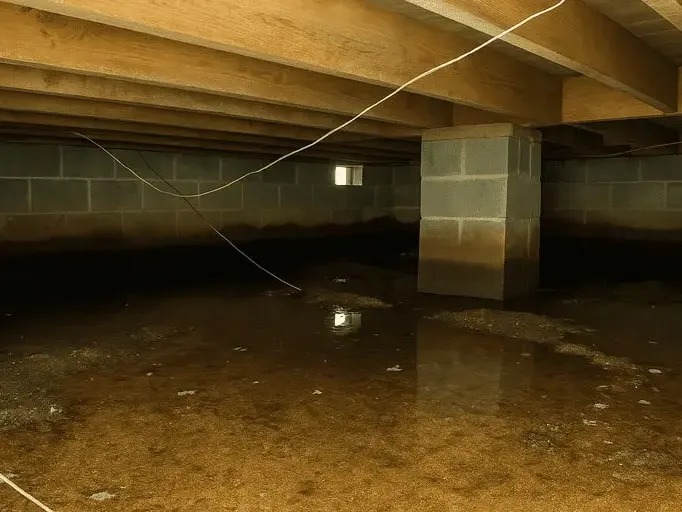
- Desiccant dehumidifiers for Class 4 materials and cool spaces like crawl spaces in winter
- Wall cavity and floor drying systems that push dry air into hidden spaces
- HEPA air scrubbers and containment when the water was contaminated
Too few dehumidifiers and the house just gets humid; too many air movers without dehumidification can push moisture into dry rooms. The drying team sizes both to the room volume and the class of the loss.
Daily readings and the drying goal
Every day the drying team records temperature, relative humidity and grains per pound inside and outside the drying area, plus readings on every marked wet location. Equipment is moved as areas dry and leaves only when the wet materials are within 2 to 4 points of the dry reference. Those psychrometric logs become part of the insurance file. The EPA indoor air quality pages explain why drying fast matters for health, and NC State Extension covers home moisture in the Carolina climate.
Structural Drying questions in Monroe, NC
What is the IICRC S500?
The IICRC S500 is the industry standard for professional water damage restoration. It covers how to inspect, classify, extract and dry water losses and how to verify that materials are actually dry.
How do crews know the structure is dry?
They compare readings on wet materials to the same materials in an unaffected area of the house. When the wet areas come within about 2 to 4 points of that dry reference, the drying goal is met.
Why does drying take several days?
Water inside framing, subfloor and drywall has to move to the surface and evaporate, and the dehumidifiers then pull it out of the air. A contained loss usually takes three to five days; hardwood and plaster take longer.
Why are dehumidifiers needed if fans are running?
Fans alone only move wet air around. Dehumidifiers remove the water from the air so evaporation keeps going and the moisture does not settle into dry rooms.
Can I turn off the equipment at night?
Please leave it running. Drying works on continuous airflow and dehumidification, and turning units off lets humidity climb back up.
Is structural drying included in an insurance claim?
Drying after a covered sudden loss is typically part of the claim, and the daily logs support it. Coverage depends on your policy, so check with your own insurer.
Structural drying across Monroe and Union County
The Monroe restoration crew covers the whole city, from the downtown historic district to the Lake Twitty side and south toward Mineral Springs, plus Wingate, Marshville, Indian Trail, Stallings and Waxhaw.
ZIP codes 28110, 28111 and 28112 sit at the center of the coverage, with 24/7 dispatch on every call.
See every Union County area coveredRelated water damage services in Monroe
Structural Drying in Monroe? Call before it spreads.
The Monroe restoration crew extracts, dries to the IICRC S500 goal and documents the loss for your insurance claim, day or night across Union County.
(888) 578-4720Call about structural drying in MonroeMonroe NC Water Damage Restoration
Monroe, NC · Union County
Open 24 hours, every day of the year
Find us on Google